
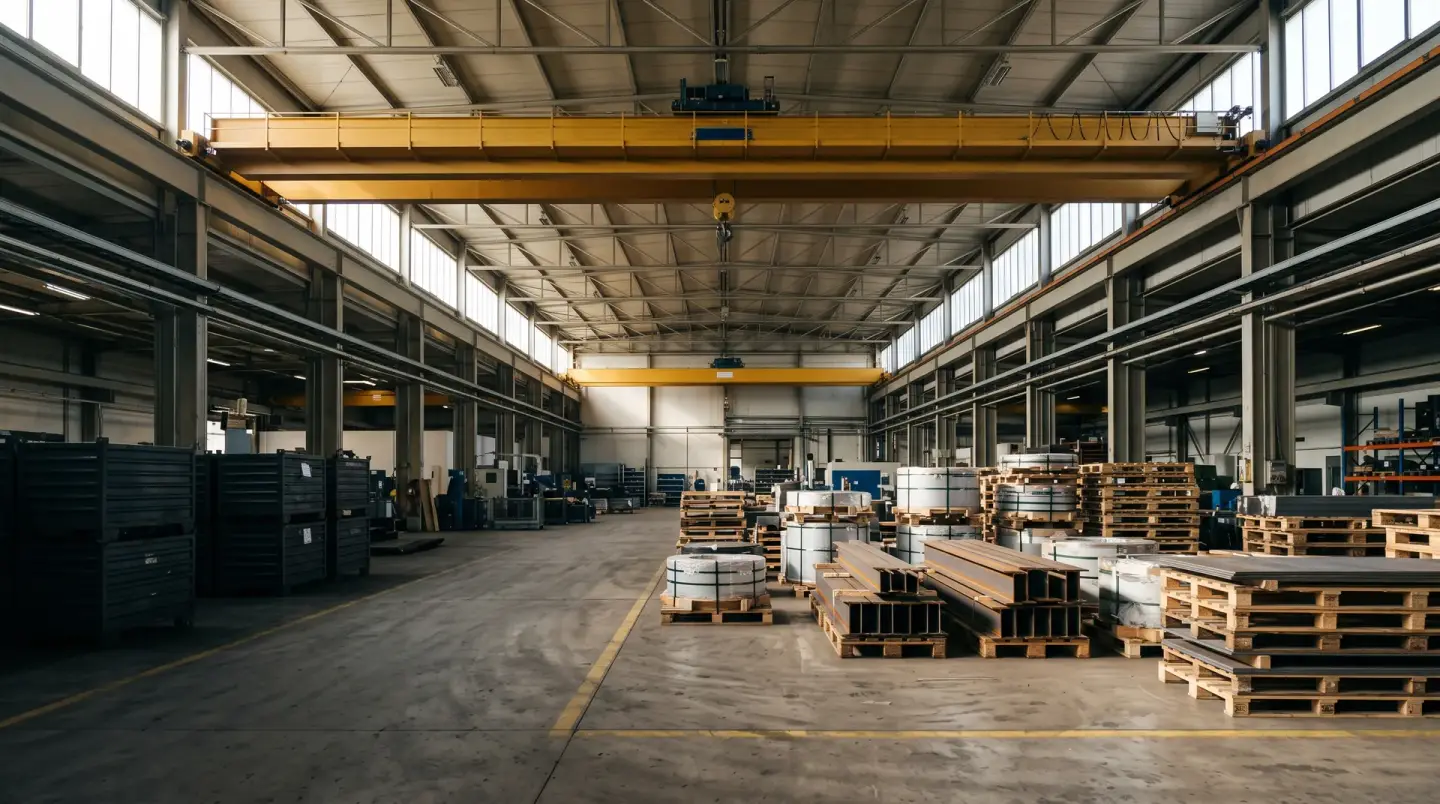
Industrial hall with overhead travelling cranes above loaded pallets, steel beams and coils

Material handling

Mast profiles, slewing bearings, torque tools and wheels for forklifts, cranes and internal material handling.

Industry needs

Material handling is about equipment that runs all day, often in shifts, and wears in a handful of places. The lift mast, the slewing ring, the wheels and the bolted joints holding the lifting gear together are what decide how long the machine can be kept in operation. The requirements are therefore concrete: tight tolerances on the surfaces that actually carry and slide, materials that take repeated load rather than a single peak value, and components that can be ordered identically again when they are replaced. That Schwerter Profile conducts research within the VDMA research community for intralogistics and material handling, together with technical universities, says something about where the development sits.

Material handling equipment rarely wears evenly. It is the mast, the slewing ring and the wheels that decide how often the machine stands still, and that is where the choice of material and tolerance has the largest effect.

Tell us which machine it concerns and where the wear appears today, and we will look at which of the parts can be improved.

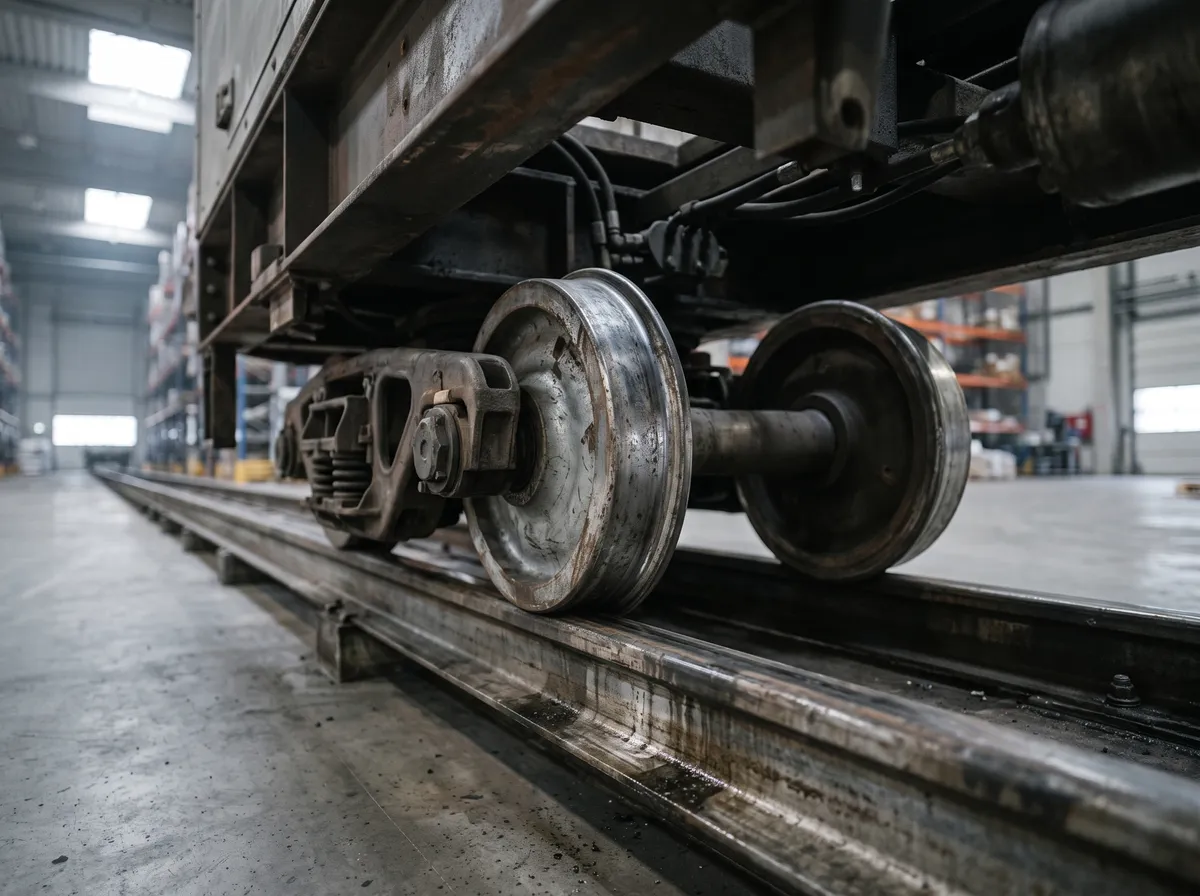
Close-up of running wheels on rail beneath a transfer carriage in an industrial hall

Applications

Mast profiles in forklifts and lifting equipment

Schwerter Profile's patented milling process SE-|M| was developed precisely for lift mast profiles, to allow design for greater lifting heights without losing wear resistance. The method gives tolerances down to 0.2 mm on the main functional surface of the profile, and better wear resistance through the choice of material and by removing the surface decarburisation.

Slewing bearings in cranes and construction machinery

In cranes and construction machinery, slewing bearings let the machines slew and tip safely under heavy loads. The bearings are designed to handle both static and dynamic loads, which is what separates safe operation from unplanned stoppages.

Bolted joints in lifting gear and fixings

Where lifting equipment is bolted together, the joint needs to be tightened to the right value and preferably to be evidenced afterwards. ITH's torque tools can be preset to the torque required, and the tightening can be documented. For radially confined positions there are compact types such as DKS and CX.

Wheels and rollers

Wheels and rollers handle rolling movement under high load and are typical wear parts in material handling equipment. They are supplied in materials chosen for a long and trouble-free service life.

Cast machine parts

Ductile iron in piece weights from 0.2 to 250 kg covers a large share of the cast parts in this kind of machinery. Where weight matters, ADI can reduce component weight by up to 20 per cent and replace several welded parts with a single casting.

Products for this industry

Aftermarket in this industry

Material handling is an industry where the replacement part matters at least as much as the original delivery. The profile geometry is entered into CAD at Schwerter Profile and the approved 0 series becomes the template for serial production, which means the same mast profile can be produced to the same tolerances on the next order. Slewing rings already in operation can be inspected and serviced via thyssenkrupp Rothe Erde, with documented maintenance and on-site support. For the torque tools there is training and rental through ITH.

Read more about our aftermarket

Frequently asked questions

What is SE-|M| and why does it matter for forklift masts?

SE-|M| is Schwerter Profile's patented milling process, developed to allow mast profiles to be designed for greater heights with wear resistance retained. It gives tolerances down to 0.2 mm on the main functional surface of the profile, and better wear resistance since the surface decarburisation is removed.

What is required of slewing bearings in cranes?

That they handle both static and dynamic loads, since the machine has to slew and tip safely under heavy load. The bearing is mounted directly against the mating surfaces and usually carries holes for quick and stable installation.

Can we order the same special profile again later?

Yes. The geometry is entered into CAD in Schwerte with all tolerance requirements, and once the 0 series is tested and approved it is used as the template for serial production.

Can the tightening on lifting equipment be documented?

Yes. With ITH's Smart Tools, pressure, preload and torque are recorded and evaluated in real time via the ITH Cloud, so the values remain available for follow-up.

Want to know more?

Contact us or fill in the form and we will get back to you as soon as we can.