
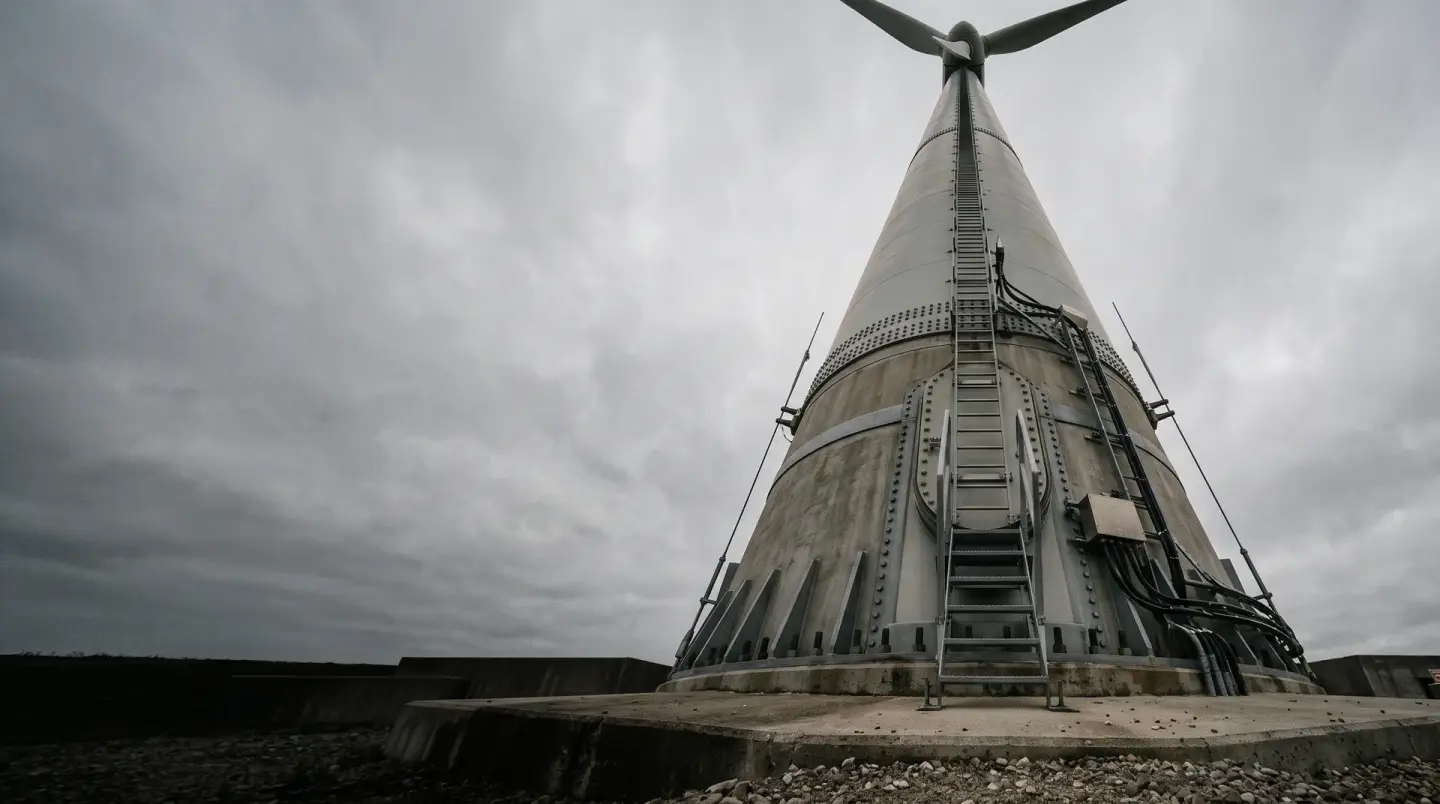
The tower base of a wind turbine with ladder and bolted flange joint

Energy & wind

Slewing bearings, torque tools and steel for wind power and power generation, in new build and in refurbishing what already stands.

Industry needs

The energy sector builds installations meant to stand for decades and run almost without interruption. A wind turbine is exposed to large wind forces and changing weather conditions, and compressors, steam and gas turbines and generators work under extreme thermal and mechanical stress in continuous operation. That sets requirements which are not about peak values but about the component behaving the same after ten years as after ten hours. The need also covers more than new build. A large share of the work lies in refurbishing and maintaining what already stands, where components have to be replaced or serviced in a structure designed long ago.

Energy is the industry where Pegol’s products most often meet inside the same machine. The slewing bearings that point the turbine, the torque tools that tighten the joints and the specialty steel in the turbine all come from the same thought: that the component should do its job for decades, not for a season.

Tell us whether you are building new or refurbishing, and what is installed today, and we will take it from there.

Applications

Slewing bearings in wind turbines

A wind turbine holds several slewing bearings. Some point the turbine into the wind, others adjust the pitch of the rotor blades, and together they are what maximises energy production. Because the bearings have to withstand both large wind forces and changing weather, the demands on durability and resistance are high.

Bolted joints in towers, hubs and foundations

ITH's torque tools are developed for challenges in wind power among others, and for assembly in field work. Where the joint has to be pre-tensioned evenly, bolt tensioning cylinders are used, stretching the bolt axially without friction and without torsion. The tightening can be documented, which means a joint can be followed up long after assembly.

Turbines and generators in power production

Power generation demands materials with differing properties: corrosion-resistant steels, low-temperature steels, and thermally resistant steels and alloys. voestalpine BÖHLER develops high-temperature steels that make it possible to keep improving turbine efficiency, and counts the world's most renowned turbine manufacturers among its customers.

Cast components in drivetrains

ADI is used in gearbox elements and drive wheels. The material is heat-treated ductile iron that exceeds steel castings in strength parameters, and it lets component weight be reduced by up to 20 per cent.

Products for this industry

Aftermarket in this industry

In this industry the aftermarket is not an add-on, it is half the job. A slewing bearing in a wind turbine sits where access is most expensive, and via thyssenkrupp Rothe Erde we offer inspection and service of existing slewing rings with documented maintenance, spare parts and on-site support. ITH runs training and certification programmes for those who operate and maintain the torque tools, and has rental tools for temporary work instead of purchase. Together that covers both what is to be built and what is to be kept running.

Read more about our aftermarket

Frequently asked questions

Why are there several slewing bearings in a wind turbine?

Because the turbine moves in two ways. One bearing points the turbine into the wind, others adjust the pitch of the rotor blades. Both movements are needed to maximise energy production, and both happen under large wind forces and changing weather.

What is required of bolted joints in wind power?

That the preload is right and can be evidenced. ITH's tools can be preset to the torque required, and bolt tensioning cylinders pre-tension the bolt without friction and without torsion for more even distribution across the joint. Pressure, preload and torque can be recorded and evaluated in real time via the ITH Cloud.

Which steels are used in turbines and generators?

Corrosion-resistant steels, low-temperature steels, and thermally resistant steels and alloys. Compressors, steam and gas turbines and generators are exposed to extreme thermal and mechanical stress in continuous operation, and that governs the choice of material.

Do you only work with new build?

No. A large part of the need in the energy sector lies in refurbishment and service of installations already in operation. We supply both to new projects and to replacements and maintenance on existing turbines and plants.

Want to know more?

Contact us or fill in the form and we will get back to you as soon as we can.