
Salts & chemicals for heat treatment
Salts and chemicals from HEF Durferrit for salt bath heat treatment, heat transfer, vulcanising and thermochemical cleaning.
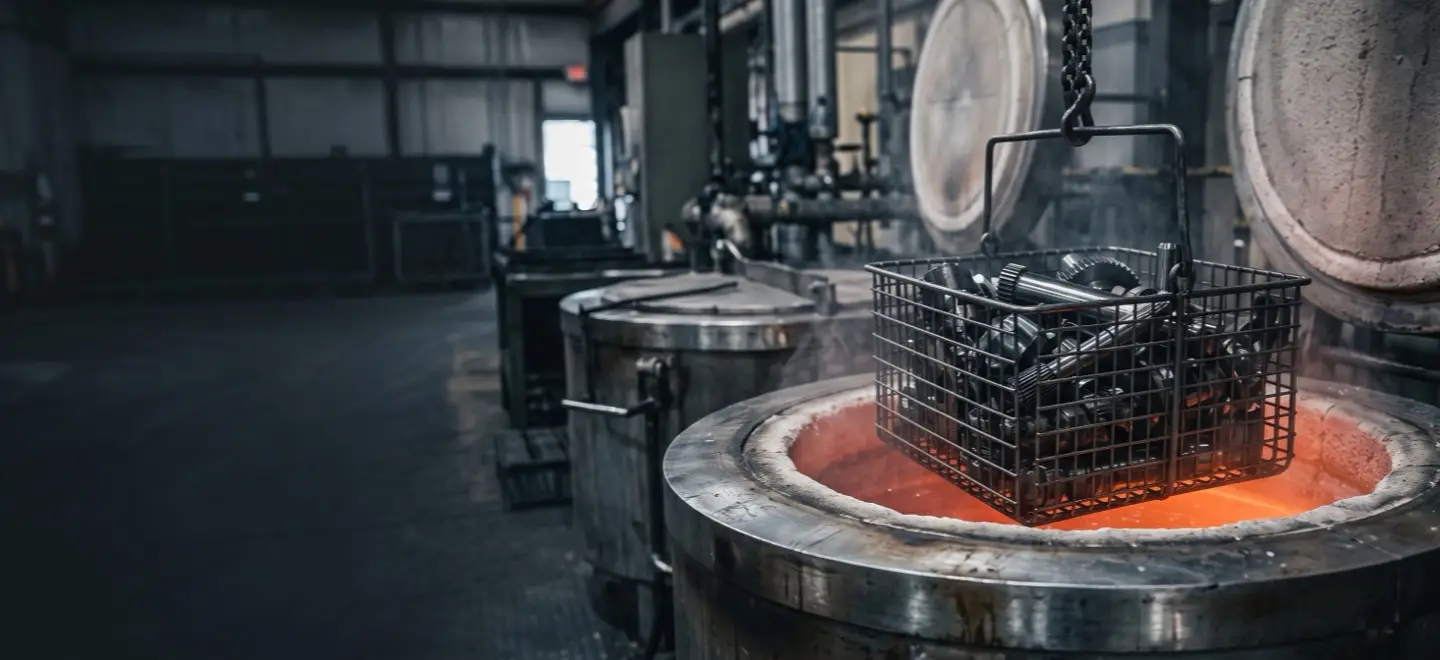
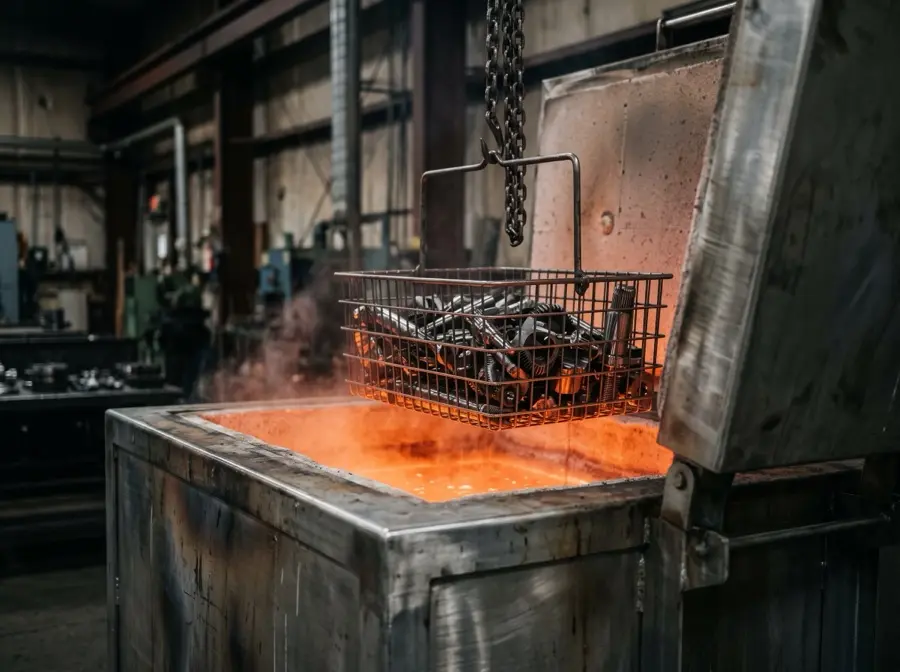
In a salt bath, parts are heated or cooled in molten salt. Heat transfers evenly and fast, which gives short treatment times and low distortion, and the treatment is virtually free from oxidation and decarburisation. Pegol is the Swedish agent for HEF Durferrit, whose salts are used in the temperature range 150 to 1300 °C. The range covers hardening and tempering, carburising, nitrocarburising with Tenifer, heat transfer in chemical reactors, vulcanising of rubber profiles and cleaning of metal parts, plus stop-off compounds for surfaces that must stay untreated.
Durferrit has developed its salt bath processes over several decades to meet the German requirements on emissions, effluents and solid waste. Cascade rinsing cuts water consumption sharply.
Tell us the process, the material and the temperature, and we will find the right salt together with Durferrit.
Product range
Salts for hardening and tempering
Hardening salts are usually used with an additive that prevents decarburisation and oxidation. The cyanide-free additives work up to 1100 °C. The AS salts are used for quenching, tempering and bluing between 170 and 550 °C, and AS 235 is nitrite-free.
- GS salts for hardening
- AS salts for quenching and tempering
- Salts for heat treating high-speed steel
- Salts for solution annealing of aluminium
Carburising and carbonitriding, DUROFER
DUROFER is Durferrit's cyanide-free process for carburising and carbonitriding in a salt bath. Carbon activity is controlled with the CECONTROL regenerator, which cuts the amount of waste salt. Set to low activity, the same melt hardens without decarburisation.
- Cyanide-free
- Carburising granules for chamber furnaces
Salt bath nitrocarburising, Tenifer
Tenifer TF 1 is the salt bath nitrocarburising process also known as TUFFTRIDE, MELONITE, ARCOR and QPQ. The surface of ferrous materials is enriched with nitrogen and a little carbon, raising wear resistance, fatigue strength and corrosion protection.
- 480 to 630 °C
- Alternative to case hardening, galvanic layers and gas nitrocarburising
- Treated carbon steel can replace stainless steel
Salts for heat transfer and vulcanising
In chemical reactors, salt melts serve as the heat transfer medium for heating, cooling and holding a constant temperature. RUBBERCURE is a heat transfer salt for vulcanising rubber profiles in continuous plants.
Cleaning salts, KOLENE
Salts for thermochemical cleaning that remove moulding sand, scale, graphite, paint, lacquer and other hard-to-dissolve coatings, even in narrow crevices and small bores. KOLENE ALKO N is used for descaling titanium.
- Cast iron, steel and cast aluminium
- Organic coatings on steel and cast iron
- Titanium
Stop-off compounds
Liquid and paste compounds that protect the surfaces that must not be carburised. CONTRADUR WSC 200 and 201 are silicate-free, applied by brush or dipping, and wash off with hot water or an alkaline cleaner.
Technical properties
| Temperature range, salt melts | 150 to 1300 °C. |
|---|---|
| Hardening, cyanide-free additives | Up to 1100 °C. |
| Quenching and tempering, AS salts | 170 to 550 °C depending on the salt (AS 140, AS 220, AS 235). |
| Carburising, CECONTROL 50 H | 780 to 950 °C, surface carbon level approx. 0.5 % C. |
| Nitrocarburising, Tenifer TF 1 | 480 to 630 °C. |
| Heat transfer, ASD and HT 400 | ASD 180 to 450 °C, HT 400 above 400 °C. |
| Cleaning, KOLENE No.4 and No.5 | 400 to 500 °C. |
| Boriding, DURBORID G | 850 to 1000 °C, hardness up to 2000 HV. |
| Stop-off compounds, CONTRADUR and WAGA | CONTRADUR WSC 200 for gas carburising up to 1.3 mm, WSC 201 up to 1 mm, WAGA above 1.3 mm. |
Which salt fits depends on process, material and temperature. Durferrit holds a data sheet per salt, and we obtain it once the process is known.
Aftermarket for this product
Salts, regenerators and stop-off compounds are consumed in the process, so the aftermarket here is about replenishment and keeping the melt at the right composition over time. Several Durferrit processes have their own replenishment salts and regenerators, such as REG 1 for Tenifer and CECONTROL for DUROFER. If you run an existing plant, we go through salt and process together with Durferrit.
Read more about our aftermarketFrequently asked questions
What are salt baths used for?
Heat treatment of steel and other metals, such as hardening, tempering, carburising and nitrocarburising. Salt melts also serve as the heat transfer medium in chemical reactors, for vulcanising rubber profiles and for thermochemical cleaning of metal parts. Durferrit's salts cover 150 to 1300 °C.
What are the advantages of salt bath heat treatment?
The melt transfers heat evenly and fast, which gives short treatment times and low distortion. The treatment is virtually free from oxidation and decarburisation, and one plant can run several different heat treatments.
What are Tenifer, TUFFTRIDE and QPQ?
Trade names for the same family of salt bath nitrocarburising processes, which Durferrit groups under the name CLIN. The treatment runs between 480 and 630 °C and forms a hard, wear-resistant compound layer with a diffusion layer beneath it. It is often used instead of case hardening, galvanic layers or gas nitrocarburising.
Are there cyanide-free salts?
Yes. The DUROFER process for carburising and carbonitriding is cyanide-free, as are Tenifer TF 1 and the additives for hardening without decarburisation, which are used up to 1100 °C.
Related terms in the glossary:Salt bath

Want to know more?
Contact us or fill in the form and we will get back to you as soon as we can.