Steel profiles – standard and special profiles of high quality
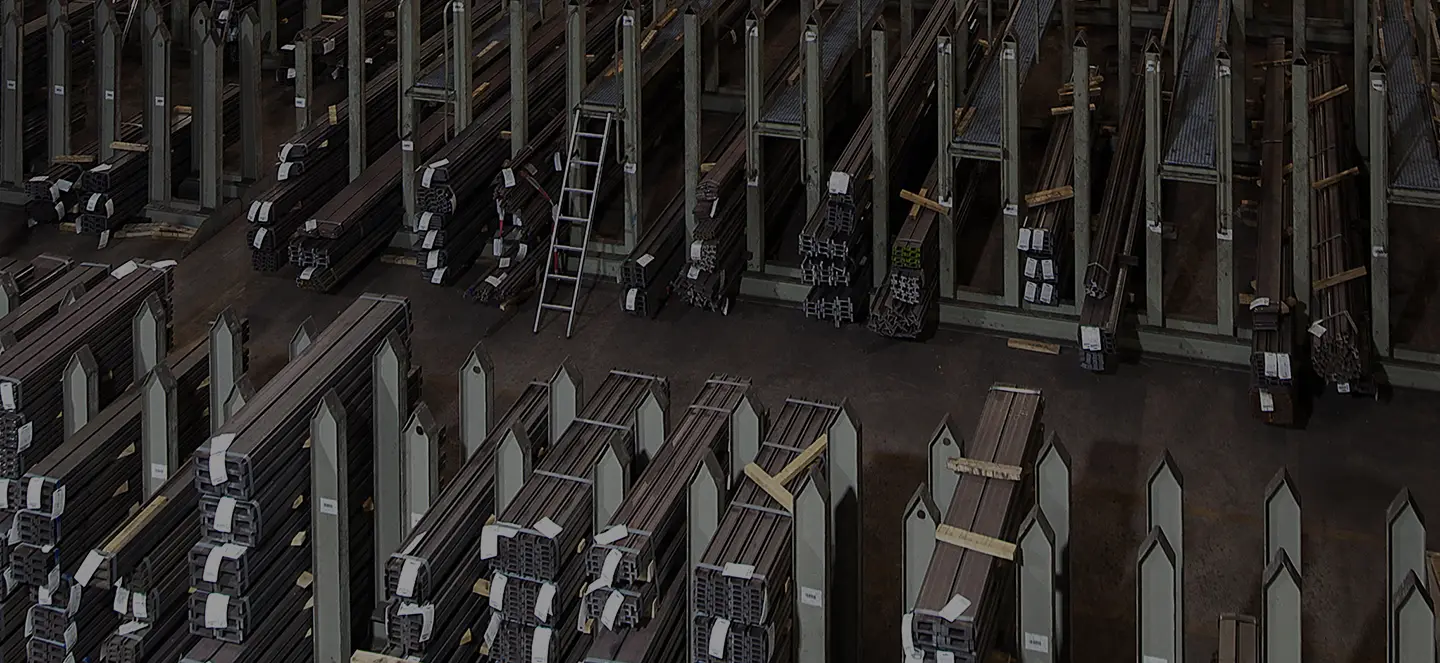
Standard and special profiles in European profile steel, hot-rolled, cold-drawn or extruded, from Schwerter Profile.
A special profile is a structural element shaped around what it has to do. Schwerter Profile forms the material so the profile meets its requirements on strength, geometry and surface, and can add processing such as sawing, milling, drilling, heat treatment and surface treatment in the same flow. Pegol supplies both standard and special profiles from that programme. The difference from buying a standard beam and machining it yourself lies in the tolerances, and in the fact that the geometry can be reproduced identically next time.
What decides a profile is rarely the material alone, but the combination of geometry, tolerance and production method. A profile carrying load in a forklift mast has different requirements from one fitting into a precision-engineered structure.
Send the drawing, or describe what the profile has to do, and we will look at whether something in the standard programme covers it or whether you need a special profile.
Product range
Hot-rolled profile steel
The starting material is formed between two counter-rotating rollers, in lengths of up to 70 metres. The method gives strength and formability and suits large-scale projects and environments where the profile has to last. Hot-rolled special profiles are used in the automotive, transportation and railway industries among others.
- Lengths up to 70 metres
- Strength and formability
- For large-scale projects
Standard steel profiles
Profiles that recur in design after design and are therefore produced as standard. Data sheets with dimensions and tolerances are held by Schwerter Profile, and a design problem can often be solved with a profile that already exists.
- Dimensions and tolerances per data sheet
- Versatile in structures and machine parts
SE-|M| – patented milling process
Schwerter Profile's own method, the "specially engineered milled process", patented in 2008 after work that began in 2003. It combines classic hot rolling with a suitable material and efficient mechanical processing, and was developed for lift mast profiles designed for greater heights without losing wear resistance.
- Tolerances down to 0.2 mm on the main functional surface
- Better wear resistance by removing surface decarburisation
- Developed for lift mast profiles
Extruded profile steel
For unique and customised profiles. The method suits small series and complex geometries where conventional rolling is not efficient enough, and the profiles are developed in close consultation on the requirements.
- For complex geometries
- Economical in small batch sizes
Cold-drawn profile steel
For more detailed structures. Cold drawing gives an even, smooth surface and exact dimensions, which makes the profile suitable for precision engineering applications.
- Even surface and exact dimensions
- For precision engineering applications
Wheels & rollers
Wheels and rollers for rolling movement under high load, in materials chosen for a long and trouble-free service life.
- For rolling movement under high load
Technical properties
| Hot rolling, lengths | The starting material is formed in lengths of up to 70 metres between two counter-rotating rollers. |
|---|---|
| SE-|M|, tolerance | Down to 0.2 mm on the main functional surface of the profile. |
| SE-|M|, wear resistance | Improved through the choice of material and by removing surface decarburisation. |
| SE-|M|, patent | The "specially engineered milled process" was patented in 2008, after development work that began in 2003. |
| SE-|M|, original application | Lift mast profiles to be designed for greater heights with wear resistance retained. |
| Processing steps | Sawing, milling, drilling, heat treatment and surface treatment. |
| Prototypes | The profile geometry is entered into CAD and a 0 series is produced for testing. An approved prototype becomes the template for serial production. |
| Electricity in production | Schwerter Profile has used 100 per cent green electricity since 1 January 2024 and is emissions-free in Scope 2. |
| Recycled material | The steel purchased consists of almost 100 per cent metal scrap. |
| Climate target | The goal is to eliminate carbon dioxide emissions entirely by 2035. |
Tolerances and dimensions differ between the methods, and the choice between hot-rolled, cold-drawn and extruded is usually governed by the series size and by how tight the requirements on the functional surface are. Data sheets per standard profile are held by Schwerter Profile.
Industries where this product is used
Aftermarket for this product
A profile in production rarely needs service, but it does need to be orderable identically again. The geometry is entered into CAD in Schwerte and the approved 0 series becomes the template for serial production, which means the same profile can be produced to the same tolerances in the next round. Processing such as sawing, milling, drilling, heat treatment and surface treatment can be added when the design changes, rather than starting the profile again from scratch.
Read more about our aftermarketFrequently asked questions
What is the difference between hot-rolled and cold-drawn profile steel?
Hot-rolled gives strength and formability and suits large-scale structures in demanding environments. Cold-drawn gives an even, smooth surface and exact dimensions, and is used where the structure is more detailed or precision-engineered.
What is SE-|M|?
Schwerter Profile's patented milling process, the "specially engineered milled process". It combines hot rolling with a suitable material and mechanical processing, and gives tolerances down to 0.2 mm on the main functional surface of the profile plus better wear resistance, since the surface decarburisation is removed. The method was patented in 2008.
When does extrusion suit better than rolling?
For small series and complex geometries, where conventional rolling is not efficient enough. The profile can then be produced economically even in small batch sizes.
Can you develop an entirely new profile?
Yes. The geometry is entered into CAD with all tolerance requirements and forms the basis for a prototype. Individual bars are produced as a 0 series to test the geometry or material variants, and once the prototype matches the specification it is used as the template for serial production.
Can the profiles be supplied as green steel?
Yes, on request. Schwerter Profile has used 100 per cent green electricity since 1 January 2024 and is therefore emissions-free in Scope 2, and the steel purchased consists of almost 100 per cent metal scrap.
Related terms in the glossary:Cold drawing,Zero series,Extrusion,Hot rolling
Want to know more?
Contact us or fill in the form and we will get back to you as soon as we can.